Showing posts with label #amediting. Show all posts

Sunday, December 10, 2023

Snakes, Cats, Dogs, and other Character Symbols


[Story symbolism; source.]

I've been blogging about how to write in a more literary fashion. Just getting the words down is the first step, and it's an important one. Keep in mind your first draft doesn't have to be literary. It's just for you, so it can all be one long sentence, a grammatical mess, more of a note to self, or whatever you want to do. If you're waiting for the perfect words to come to you the first time, you won't write anything. Building in the literary happens in subsequent drafts. That's when you carefully ponder your foreshadowing, symbolism, precise language, authentic dialogue, and other literary techniques. One of the most meaningful is symbolism. 


[Symbolism of a Fox; source]

I've been helping Evelyn Furbish, a friend, reshape her draft into something literary. Her draft is fine. It has clear characters and moves quickly. But adding in the literary turned her simple story of an abused child into something that means more on several levels, something truly special and powerful that could not just be published but also win awards. It won second place in a first-chapter contest for League of Utah writers. And a big part of that is symbolism. Symbolism makes your character into something more than just a person. It draws on the traits of the animal, or whatever is used as the symbol. It also draws on common cultural associations with that animal. If you use a fox, you can draw on the speed and agility of the fox as well as associations like "sly as a fox" or the associations with the word vixen, a female fox, a "shrewish or ill-tempered woman" (Mirriam-Webster), or a sexy seductress. You can draw on a lot with one well-chosen symbol. 

[Mouse; source]

In my friend's draft, that boy is becoming a symbolic mouse.  As we rewrite and reshape her prose, we carefully ponder the language to show him as a mousy, skittery little boy who hides in corners and is targeted by everyone. He's still a human child, but the book builds him up as easy prey for any number of emotional predators. 

[Rabid dog; source]

Meanwhile, his mother has been reshaped as a rabid dog. She's a druggie who leaves her son every day to get high and drunk with her dealer boyfriend, but he doesn't know. He sees her through rose-colored glasses, comparing everything he sees in the world with his narrow view of the world seen in comparison to the unpleasant mess he knows from his mouse hole. She is his comfort, his home base. When he sees fancy houses or food, he treats them with disgust because they can't measure up to the processed and cheap food he's been given at home. He doesn't see his mother's symbolic slavering teeth. She doesn't use claws because that's not a dog thing, but in the next chapter the author has planned, this mother will bark and threaten like that dog, showing him unmistakably his true colors. 
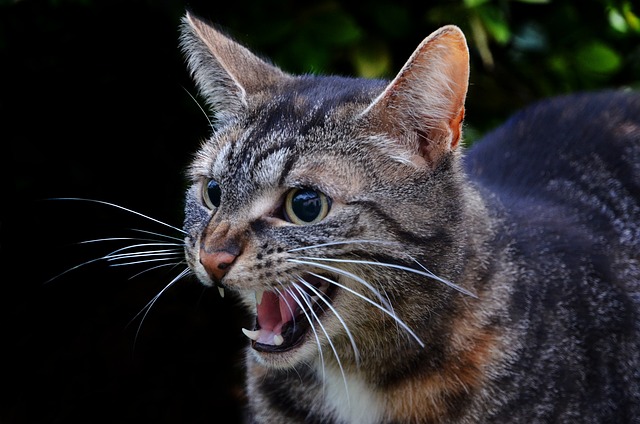
[Mean cat; source]

The CPS worker who takes him away from his familiar mouse hole is the one with the claws. She's the cat who hisses and growls when pushed. She's the one who chases the little boy verbally and corners him with her words. She's the one who snatches him with her claw-like nails from home and exposes him in his miserable nest to take him away. She snaps  him up, metaphorically, like a furry little snack. 

[The snake; source]

The little boy's foster dad is the snake, sly and cold and ready to swallow him whole and turn that little boy into part of himself. He knows just how to make eye contact with his acid-green eyes and freeze him in his tracks, so his prey can't even ponder escape. He uses manipulation instead of violence to reshape the little boy into her own image. 

[Teddy bears; source]

Meanwhile, the boy's allies, whose symbolism has yet to be determined, will be something warm, fuzzy, and comforting. There will be hope, and it will be built through the language and metaphors of the text. They could be the warmer side of dog or puppy, a teddy bear, a kitten, a hamster, or anything else that gives the friends appropriate meaning on every level. 

[Animal Farm and symbolism; source]

 For a reversal of this pattern, you could read Orwell's Animal Farm, which uses animals to symbolize types of humans. There is a wealth of information out there on the characters and what they mean. Now, ponder your characters. Would it be helpful to do an exercise like this, where you use overall symbolism to shape the characters into something greater than the individual parts? 


Monday, November 6, 2023

Writing for Kids


[Making kids' books come alive: source]

I've been blogging about how to write in a literary fashion. This entry is not necessarily about literary writing so much as writing chapter books or middle school fiction. Many of these tips can help with any age level. However, there are many methods of writing that work just fine for writing for older groups. However, if you're going to write for older elementary or middle school readers, there are certain things one must keep in mind.  These are tidbits I've picked up over the course of my research on how it's done. Many writers have written exhaustively on these topics. If there's something you want to find more about, you can look it up. 

[Write for your reader: source]

1. Choose and research your age group. Step one when you're going to write for kids is to choose a target age group. The rule of thumb is that the characters in a book should be just older than the target reader. Therefore, if you're writing for young teens, your character can be about 16. If you're writing for the middle school or slightly younger age bracket, think in terms of 12- or 13-year-olds. If you're looking to write chapter books for those just out of picture books, think in terms of something like a ten-year-old protagonist. Whatever your age group, read what you want to write, so you get a sense of how to do it based on successful writers' work. 

[Keep it brief and fun: source]

2. Keep it moving. Everything should be kept shorter: shorter paragraphs, shorter sentences, and shorter chapters to keep the reader moving forward. If you can end each chapter on a cliffhanger, that would be better still. Action needs to start right away. You should show some indication of where the story is headed by the end of chapter one. It is helpful if you can even introduce an antagonist by the end of that first chapter. You can still think in terms of the hero's journey, but the time spent establishing the normal world should end as quickly as possible. 


[Keep it exciting: source]

3. Keep it exciting. Plan to keep most events and actions external for the most part. Kids often get bored with long internal monologues or flashbacks, which a mainstay of writing for adults and even teens. I've read a lot of romance novels that hinge on what is going on inside the character's mind, as in Pride and Prejudice. So much of what happens to Lizzy, Bella, Katniss, and just about any protagonist for older audiences occurs inside. That often does not work for kids. There may be the occasional very brief flashback and some thoughts, but the vast majority of action should be represented outside the characters' heads. Show don't tell is particularly critical in kids' books. Say your character is angry. Show him clenching his fists and turning red. External action is often more fun than internal, and show is almost always better than tell. 

[Don't fog up the action: source]

4. Keep it clear: 

            a. Skip the fancy language. Adverbs will often make the action wordy and long. Stephen King's biggest complaint about the Harry Potter books when they first came out was that they, like many outings by novice writers, were choked with adverbs. Dialogue tags, especially, should stick to said, asked, shouted, or whispered simplicity and not include adverbs. Actions can be used instead of dialogue tags, as long as it's clear who said what. Keep adjective lists brief. Avoid passive language. 

            b. Don't use filtering language. Filtering language, language describing what characters experience rather than just showing the actions, can also bog down the story. Don't have the kid watch a fight. Just show the fight. Don't have the actor in a sentence see, hear, watch, feel, etc something. Just make the thing happen. Make the main actor in the sentence the person doing the thing. Don't: John watched a parade march by. Do: John stood at the door while a parade marched by. 

            c. Scene and sequel. Reactions should occur only after the action. This is called scene and sequel. Don't: She jumped to the side because a rat ran by. Do: A rat ran by. She jumped out of the way. This makes action clearer and crisper. The reader is reacting even as the character is. 

            d. Avoid head hopping. If you must switch back and forth between perspectives, do it between chapters. Hopping from head to head to head in the middle of a chapter, especially in kids' books, can get confusing. 


[Get help as you review: source]

5. Get help as you review. Writing groups can help you with your dialogue to make sure that it actually sounds like the way kids speak. You don't want a regular kid to talk like an adult. Programs like Autocrit can help you make sure your writing is appropriate for the target audience and can help you eliminate items above that get overwhelming. 

If you have a piece for younger audiences, make sure to review the tips above with it. The most important part is to read what you want to write. If you haven't read kids' books, it's really hard to write them. If I missed anything, please post it in your reactions. Also, tell me how things are going with your kids' books. 


Monday, September 11, 2023

Building Tension through Planning

[Making a Plan: source]

 I've been blogging about how to write in a more literary fashion. Before I launch into that, I have to make a quick plug. The first installment in my kids' chapter book series, Doomimals, is now available on Amazon. This is just the beginning of a major saga we have planned. I have the first ten books drafted and many beyond that planned. It's about three kids and their animal protectors saving the world from the minions of the evil Bird and the Dog of War. If you're interested, you can pick up a copy here. Today's topic is planning and is not specific about literary writing but about writing in general. There are conventions are a character in a story making plans. They're simple but must be remembered as a way to build tension in the reader.

[When the Plan Goes Wrong: Source]

Most people have read a book or seen a show in which a character gives very specific details of a plan for something they're about to do. Now, predict what happens. Of course, the plan goes wrong. I've read books in which the plan goes RIGHT. When that's the case, the reader is bored because they see the plan, they see the plan executed, then they see characters chat over what just happened. With teaching, with real life, this is the idea. But in storytelling, it's a great way to bore (read: lose) the reader. SOMETHING in the plan has to go wrong, or your reader will be unimpressed. I'm sure you can think of several examples of plans falling apart right now. The plan sets the template of how it's supposed to work and foreshadows that something will go wrong.  The reader is on the watch for that something. It actually amps up tension anticipating this. 

["I love it when a plan comes together." Source]

If, however, your characters are actually going to complete their plan, the narration should get vague about what's about to happen. "Joan and Simon made a quick plan about how to break their father out of jail." Something like that works fine. When I read that in a narration, I know it will likely work. However, you can twist the reader's sense of what's coming by getting vague and then have things fall apart anyway. It may be a bit frustrating because the reader doesn't know how things should work in the first place, but if the plan isn't central, it can still work. Not sharing the plan builds tension because the reader will follow along with the characters and see them execute the plan as it happens. 

[Planning toward Tension: Source]

Either way, a plan is a useful technique for building tension. Think of shows like "Mission Impossible" or "Oceans 11." The parts of the plan that will go wrong are laid out in detail, so the reader can view them as a template for what should happen vs what does happen. Particularly in the Oceans series, the audience is not party to the plan until it's executed. There are parts of it we don't learn until after it's executed to provide plot twists and unexpected events. We, the audience, find out what the full plan was along with the antagonist, who only finds out how badly he lost after he did so. This step beyond creates both tension and excitement. 


[Your turn: Source]

Read or watch shows in which the plan is discussed and doesn't work or glossed over when it does. Is there a point in your story in which you can use this pattern? Is there a place where it's useful to only show parts of the plan after the fact? Can you amp up your reader's tension by showing how it should work? Give me examples of either in the comments. 


Sunday, July 16, 2023

The Story Drop

[The Drop: source]

 I've been blogging about how to make writing more literary. A while ago, we looked at the normal world. Whether you're writing from a hero's journey perspective or not, there's usually a point at which your story really kicks into high gear, and you've confirmed your genre. You don't want the normal world to be exactly boring because you'll lose your reader. That is the time to really make your reader care as you develop your character and make them and their world interesting. But then, the drop comes, like a drop in music. The shift comes from the normal world to the real story, and that is when you should really engage your reader through the story. 

[Decisions: source]

That drop can happen in any of a number of ways. If you're writing literary fiction, it may be when a new character enters to alter the dynamic or when the first major choice on which your story is based is made. This is when Hamlet meets his father's ghost or Macbeth first decides to kill the king. If you're writing a romance, that drop may come when the protagonist meets their romantic pairing or when they go into the underworld, figuratively or literally, where they will meet or engage with their future significant other in the plot. Romeo meets Juliet. If you're writing an adventure story--western, sci-fi, fantasy, horror etc.--it should absolutely be when your story goes from world and character introduction to the first step into the underworld. Harry Potter meets Hagrid or is introduced into the Wizarding World on Platform 9 3/4. Either could be seen as a drop. 

[Engaging the Reader: source]

By this point, you should have made your character engage emotionally with your protagonist through the normal world, through loss, through humor, through empathy, curiosity, etc., so when the conflict comes, we care what happens. Sometimes, the drop comes, and there's no significant difference. They step into the underworld, and the character and reader don't realize it until they're in the thick of peril or engagement. Sometimes, the character doesn't realize it, but the reader does because they've spent the first several pages waiting for the protagonist to meet the future significant other. If the drop is too slow, too uninteresting, you could lose your reader. I held on with a sci-fi version of Pride and Prejudice until Lizzy showed up, and that moment was flat and dull. I walked away. Sneaking up on the reader can be good if it's done with subtlety instead of awkwardness or boredom. Especially if there's a solid payoff. However, it can also hit like a tsunami, launching the reader into a wild adventure

[Gandalf: Gatekeeper of the Underworld: Source]

Whatever is driving your story starts kicking into high gear. There should be some kind of ramping up, some increase in intrigue, suspense, excitement, tension, or the like. If your story is character-driven, there should be an increased awareness of their desire for things to be different. Val Jean yearns to break free of his prison cell, both exterior and interior. If your story is plot-driven, your character might just then realize the world is broken, whether or not they realize they will have to fix it. Harry Potter learns about Voldemort as part of learning about his past. If your story is question-driven, this is when the central question is posed. It's that moment the femme fatale walks into the gumshoe's office with her mystery. If your question is milieu or world-driven, this is usually when the protagonist enters the strange world. Gulliver sees the little people, or Gandalf introduces the Hobbit to a world outside his Hobbit hole. 

[Make the Drop Special: source]

One way or another, the author needs to be aware of that drop and take pains to make it mean something. This is when the story really starts. What do you do in your story to mark the entry into the underworld or the introduction of the other romantic lead? What do you do to really engage the reader to a higher degree? If you can't find anything, is there some way you can improve or rework that part to make the reader care? 


Sunday, April 9, 2023

The Hero's Hand

[When somebody/something else saves the day; source]

I've been blogging about writing anything in a more meaningful fashion. I once listened to a presentation at a writer's conference by Chris Heimerdinger about how the big action should somehow be done by the hero's hand. I have since then read a lot of stories in which the protagonist either overcame or participated in the overcoming of the antagonist/larger forces at work and many in which the protagonist didn't. (Spoiler alert) In Jurassic World 2, the heroine leads one monster through the city strategically to make sure another monster takes it out. She took charge of her fate and saved herself. Meanwhile, in the latest movie, the director got all the heroes of the Jurassic Park series and the ones of Jurassic World together for a dramatic climax in which...none of them did anything but stand there while the dinosaurs took each other out. No hero had to do any heroing. I can't imagine a more disappointing way for a series to end. There is a huge difference in the impact of the two kinds of narratives, and I find myself agreeing that the best stories do, indeed, give the hero a big role in the climax. 

[Hand of God; source]

It's tempting to solve all the hero's problems with deux ex machina, God in the machine. There are a lot of books out there in which some divine power either literally or figuratively saves the day. Most of the best fiction avoids this because it's too easy. Divine powers can help, but if there is no participation by the main character we have followed along the whole book, it's a major let down. The hero can resolve problems through divine aid, but what's the point of watching a hero develop skills if those skills have little to do with the resolution? 

[Luke vs Darth; source]

I actually read a book recently wherein the heroine didn't have to fight the antagonist on any level. She prayed, and the divine power in the book took care of everything. The author was probably thinking she prayed, right? But the only emotional reaction I had to the climax was disappointment. If Luke Skywalker had stood by, watching a lightning bolt come down and blast away Darth Vader or Emperor Palpatine, the movies may have died a quiet death before they become a phenomenon that has affected generations of audiences. Many have compared the force to priesthood/divine authority, in the first series, and Luke's clothing was reminiscent of a priest in "Return of the Jedi," but he used the power, himself, and/or inspired his father to do so through his actions. 

[Helpless heroines--source]

It's almost as bad when some other figure in the book steps in and solves all the problems for the main character, but this is more common. I would have much preferred Disney's "Snow White" had the protagonist actually lifted a finger to take out her evil stepmother and "Sleeping Beauty" had it been the princess to slay the dragon. Of course, one can argue Aurora's prince is a main character, too, which makes the ending somewhat better. It's only with later generations of Disney movies that the protagonist gets to face off with her antagonist, when there's an antagonist to be found. Imagine how exciting it wouldn't have been to follow Harry Potter all the way to the end only to have Dumbledore or Snape stand up to Voldemort in the end. 

[Protagonist faces the dragons: source]

Does your hero take down your antagonist or at least have a serious hand in it? They may send forth the beast that faces the dragon, resolving their story arc and showing the themselves to be master of both the under and the upper worlds. But one way or another, do yourself and the reader a favor by making sure you, the writer, don't become their worst enemy through dull writing and a hero who can't save the day in the end. 


Sunday, February 12, 2023

Action vs Violence

[Action or violence?-source]

 I've been blogging about how to write in a more literary fashion. This post is about defining terms and about gradations of action in a story. Some stories avoid any kind of physical danger. Modern and historical romance novels, children's stories, and other stories are primarily character-driven and often focused more on relationships. There may be brief scenes of action or physical risk, but this is often not an issue in these stories. At the other end of the spectrum are stories that are nonstop action, death, and/or destruction. When one is writing this kind of story, one must be aware of the audience and purpose as the writer crafts a story.

[Action vs Violence-source]

I first became aware of that fine line between action vs violence from famous actor and director Jackie Chan. He says he wants his movie to have “plenty of action, but not violence." So what's the difference? If a character seriously injures or kills another character, that is violence. Think "Taken," "Terminator," "Alien," horror films, war movies, and the like, where guns, swords, or other means draw blood and cause serious bodily harm. Movies and novels with violence are everywhere. 

[Examples of Action-source]

Action, meanwhile, is still about movement, risk, and danger, but it often doesn't involve bloodshed, broken bones, and gory death. Think most Star Wars, Harry Potter movies, Disney, and similar shows. Jackie Chan may knock down and fight enemies, but no one is bleeding. There's still something at stake, often something broken in the world that the main characters need to fix, but graphic violence is rare or minimal. 

[Heroes and Villains-source]

There is a place and an audience for any approaches to physical risk and danger. Frequently, books intended for younger audiences avoid violence in favor of action. The focus is on defense and heroism. Right and wrong are clearly defined. Heroes rarely kill the villain. If the villain dies, the story will often avoid having the protagonist somehow avoid delivering the killing blow by having the villain, himself, or someone or something else causes that death. In Disney movies, the prince, dwarfs, or some other side characters push the dragon off the cliff. Gaston leans back trying to stab the Beast, and he falls to his death. There may be some violence, some blood, but most of it is off-screen, high-tech (against robots or using a laser or lightsaber), magic-related, or somehow minimized. 

[Violence-source]

Older audiences often prefer gradations of gray. Violence can be throughout, with the protagonist and other characters meeting the antagonists' violence with their own. Think Marvel's Punisher. The hero can also be made to seem more heroic in hesitating to meet violence for violence, death for death. It may be that the hero doesn't hesitate to use violence but only kills when forced or doesn't kill at all. Marvel's Daredevil, for instance, will beat down hallways of enemies to rescue a child, ally, or antagonist, but he draws the line at killing. The conflict between Punisher's and Daredevil's perspectives on whether or not killing is justified or necessary is built up as the central theme of season two. The show combines and alternates between action scenes and ones of intense violence, depending on the needs of the story. 

[Mirror-source]

Choosing how to use action without violence, a focus on violence, or somewhere in between will depend on your intended audience and what you're intending with it. Where is your focus? What level of risk and action works for your genre, your protagonist, and your story? Be true to your main character. Your antagonist and protagonist should mirror each other in some way. What makes them the same? What makes them distinct? If your hero uses more intense violence than the antagonist, what makes him/her/them the hero? Think of the morals and ethics of the characters. What is limiting or enhancing the level of action and/or violence? Think carefully through your approach and how this highlights your important characters to make your whole story more intentional and meaningful.

Saturday, October 1, 2022

Side Characters

[cast of characters-source]

I've been blogging on how to write in a more meaningful and literary fashion. One critical character type that you'll need to include for almost every kind of story, whether fictional or factual, is the minor character. Minor characters flesh out your world, make it feel more realistic. Without them, it's just your main character(s) and their antagonist(s). That can work for some books and short stories but not many.  Most stories need inhabitants that people your world, and you'll need to give some thought to how to craft those characters. 

[Minor characters peopling the world-source]

One kind of minor character is someone who may be a name and/or face who is part of the crowd, one who doesn't play much of a part in your story but simply serves to texture the world. These characters can be given some slight description, a name, a face, but they should generally be unmemorable. They mostly serve as a backdrop. They may interact with the main character but only in minor ways. These are the hotel clerk, the main character's student and/or her parent, a witness to a crime, etc. Think of Rosencrantz and Guildenstern in "Hamlet." They started out as his friends, became his enemies, and eventually ended as pawns in his war against his father, used by both side. 

[Hamlet-source]

If they serve any part beyond just peopling your story, it should be to highlight some aspect of your main character, to make them stand out. Rosencrantz and Guildenstern highlight Hamlet's progress from bystander to blade of justice in his late father's ghostly hand. If your protagonist is running for his/her life, the minor character is the distant sibling ignorant. of the hero's danger or the tourist simply enjoying the sights. They're living the peaceful life your protagonist wishes to have. They're bodyguards of the enemy who show the competence or lack thereof of the protagonist. They may stand out briefly or steal a single scene, but they shouldn't overshadow the main character. Every character that stands out in any way should be there to advance the protagonist and/or the plot, in whatever small way. One of these characters could even start out part of the background but turn out to be a secondary character or an antagonist or an important key to the mystery, a rifle on the wall.


[Peopling world like Harry Potter's--source]

Another kind of non-protagonist character is one that plays a significant role, a secondary character. This is the kind of character that can be memorable, can steal scenes, may land clever lines and star in pieces of the story but should not be the main heart of the story. Subplots can revolve around them, but the main plot should engage directly with the main character.  If the main goal of the antagonist is to thwart a secondary character with no connection to the main character, your story will feel disjointed, like you chose the wrong protagonist. Ron and Hermione can take the lead for certain parts of the book, but Harry Potter is clearly the perspectival character, the protagonist. In the aforementioned "Hamlet," Horatio is the only character who comes close to knowing the truth behind Hamlet's charade. 

[Mirroring the protagonist--source]

These secondary characters help the protagonist grow, give them the opportunity to interact in order to illustrate aspects of the character, and provide side conflicts and comic relief. They mirror and contrast with the protagonist's choices. These are friends, significant others, and other associates that mirror and expand the plotline. Their critical role in the story is to help the main character grow and pursue their main goal. They challenge the main character and help them grow. They enlighten aspects of the main character even the main character doesn't understand. They may be threatened to help the protagonist rise to greater heights or even sacrifice themselves on some level to help the main character succeed. 

How are you using your side characters? Do they ever take over as the protagonist or overshadow your main character?  Do they always serve an important enough role to justify their existence?  Why is each one there?  How do they improve and enhance your hero's voyage?  


Sunday, August 28, 2022

Destroying the Precious

[Editing time-source]

 I've been blogging about how to make writing more literary. One of the most important differences between inferior fiction and amazing fiction that kicks off a future with diehard followers is the editing process.  Your first draft can be absolute trash, but as long as the editing takes as long and as much effort (on your part and someone else's) as it needs to, you can still end up with a brilliant and meaningful final copy.  Your writing process can involve outlines, pages of background and characterization, or just a lot of pantsing.  The key is in editing, and some of that may likely involve scrapping the moments, characters, entire scenes, or long chapters into which you've poured your heart.  Sometimes, your final best work involves shooting your darlings, those bits that are just too precious, too detailed, too inessential to stay.  

[Your Draft-source]

So you have a draft.  You may love this draft or hate this draft.  It can be anything from short poetry to an autobiography to literary (non)fiction to the wildest sci-fi romp. That draft is done.  Now what?  Don't even think about looking at your commas or other fine editing at this stage.  The first step is to take a careful look at the structure and major characters, themselves.  If you can afford to have a freelance editor who does this kind of story editing, all the better. Even Stephen King needs an editor, and he's a master. If you have a publisher breathing down your neck, great.  They may have someone to pitch it.  You may also have friends or a writer's group to look over.  Or you may be doing it all yourself.  I don't recommend the last option, but sometimes, there's no choice.  

[Editing-source]

Regardless of whether you now have a pile of editors' or other readers' comments, you really need distance from the text, as much as you can afford to give yourself.  If it's a few days or even a week, fine.  If you can give yourself a whole month or more, even better.  When you've just carefully crafted that cherubic/charming/witty/scathing/etc cast of side characters, what you see as amazing dialogue, a brilliant series of scenes, and a whole book that just feels wonderful to you, you're too close.  It's like investigating the murder of your best friend.  There won't be any emotional distance, and you're not ready.  

[Taking a closer look--source]

Because when you start giving your manuscript a really close look at your story editing, you need to see it with fresh eyes.  You need to see each scene, each character, each description with a clinical eye.  What purpose does each aspect of the story serve when it comes to building up the main character's story arc, the critical subplots, the overall plot, or the 3- 7- or 12-act structure, whatever you're using?  If nothing, it can't stay. 

[When beauty achieves nothing--source]

If there's a beautifully written, breathtaking scene that you poured your heart into that doesn't contribute substantially to the symphony that is your piece, it needs to go.  If there's a clever, witty side character that draws too much attention from the protagonist's main growth, you may want to keep him/her/it/them for another story.  You don't have to simply erase.  You can always keep a running side document where you keep your best cuts.  It may inspire you later. 


[Achieving balance--source]

But if you've got 30 characters in a 100 page book with very little characterization or possibly a breathtakingly purple (florid, overly descriptive) background with uninteresting foreground characters, something, probably a lot of somethings, need to go. It's at this stage you're finding your balance and the voice of your narrative.  I don't care how much you love that scene/dialogue/character/set. If it doesn't perform a critical role in the overall story or distracts in any way, it's time to break up with it for the sake of keeping the narrative compelling.  If it becomes too precious, too specific, and slows down your story, it just can't stay.  

[What feedback can feel like--source]

Editing can be such a hard part of writing. You get feedback that may feel like a gut punch or leave you reeling, wondering how you'll achieve what the reader wants.  Trimming back scenes and characters you love can feel like you're parting with your best friends.  It has to be done to make your final product what it needs to be to keep the reader glued.  

                                                                   `

Sunday, August 7, 2022

Structure of Romance

[Writing Romance Novels--source]

 I've been blogging about how to make a piece more literary. One piece of advice almost every writer will give you is to read what you plan to write. Since I am working on clean romances, it makes sense to read a lot of them. And I have, from Austen to Bronte to Stephenie Meyer to an ever-increasing list of modern writers. Some write period romances, some fairy tale adaptations, some fantasy, some modern, and some sci-fi. There are patterns that hold true, no matter the genre. 

[Exploring characters' eyes--source]

Step one is to dive into the protagonist's character. If we're talking about a heterosexual couple, several romances give intense focus to the female lead alone. Occasional romance novels only focus on the male. Some authors, such as Stephenie Meyer, write a book from one perspective then book from the other (Twilight back to back with Midnight Sun gives you both). The other perspective is entirely a mystery or, as in Austen and Bronte, we get hints of other perspectives from an omniscient narrator. This is how we get such an intense focus on Lizzy, but we still get to hear Darcy's perspective on her "fine eyes." Later authors will often do a Midnight Sun on a classical work, or recreate Austen's original work through, say, Darcy's perspective or Bronte's through Rochester's eyes. 

[Romance on a bike--source]

Many modern romances balance the male and female leads (once again, in heterosexual romances), alternating between the two. Keep in mind that it's possible and always best to introduce the characters through show (show them losing a friend or family member; show them caring about something or someone) rather than endless data dumps. The reader needs an immediate attachment to one or the other, or the reader is gone. The way the main characters relate to each other can come as a shock to the reader: an assassin and his/her target, beings from two different (possibly alien) races or cultures, a peasant and a royal, etc. Many start as strangers like in Jane Eyre or Northanger Abbey or friends as in Mansfield Park. Several start their relationship as enemies before anything romantic begins. It's not a version of Pride and Prejudice nor of Much Ado about Nothing if sparks don't fly one way before they ever do the other. 

[Romance Begins--Source]

After that, the dance begins. The couple-to-be meets and has their first impression of each other (or we get a portrait of their existing relationship). There may be some kind of chemistry or interest associated with a description of (usually) attractive looks, but frequently, the initial meeting is one of indifference or a negative response. It appears for a time the characters will remain in separate orbits or in the status quo. This is the hero's journey's equivalent of the normal world. 

[Next Stages in the Dance-source]

Then, something happens (often danger, if it's genre, or enforced interaction if it's more literary or mainstream). Some action forces the two out of their regular orbits. This is the call to adventure, and one or the other or both protagonists often refuse at first. They reject that force that brings them together. Frequently, there will be some kind of early touch that excites an initial physical response for good or for ill. Sometimes, any kind of touch waits until the characters realize that they've started to first trust then feel something for the other. As they interact more and more, touches, accidental or otherwise, become more and more frequent until they make a realization of first an instinct to protect, then some level of trust, then romantic feelings. Sometimes, those feelings go unrecognized or misunderstood until the last few pages. 

[The dance--source]

The first touch is often just a brush, a light touch on the arm, a rescue, two bodies running into each other through force of circumstance, etc. As the characters become more and more interested then interactive, the touches start on the outside, an arm, a hand, clothing. Then, the touches tend to focus around the face, a touch of the cheek, foreheads touching, a light kiss somewhere on the head or hair. All of this may crescendo with a light then intense kiss. Some tales end with this. Some result in the two making some kind of commitment like living together, a title like boy/girlfriend, or marriage. If the romance is of the more intense (not classified as clean variety), the crescendo may be sexual in nature. This blog is not about that kind of romance novel, but they're common. The best way to get a feel for any kind of romance novel is, as with any writing, to read the masters and learn from those who know how to write the scenes you want to emulate. 

[Together in the End--source]

One way or another, your book can't be classified by publishers as a romance if the two characters don't end up together. It may take one book or two or three or several for this happily ever after. The rhythm of the dance and rate of movement from one level of touch and romance to the next will depend on your plans for plotting. Books like Twilight often have the couple together on some level by the end of book one. Everything that happens next just takes them through other adventures with the series ending only after marriage and childbirth. The reader can feel satisified if they just read book one. And sometimes, there's only a standalone, so there is no book two. Meanwhile, Vampire Diaries and several other books may carry on with a love triangle, building suspense over several books. Other books tag team, creating a series of romances all in the same world, interconnected but not the same romance, over several books. 

One way or another, if you want to write romance novels and get the feel for their rhythm, find which kind of romance novel you like and immerse yourself in them. Get a feel for how they're structured. Then, you'll be able to write them for yourself.