Showing posts with label #symbolism. Show all posts

Sunday, December 10, 2023

Snakes, Cats, Dogs, and other Character Symbols


[Story symbolism; source.]

I've been blogging about how to write in a more literary fashion. Just getting the words down is the first step, and it's an important one. Keep in mind your first draft doesn't have to be literary. It's just for you, so it can all be one long sentence, a grammatical mess, more of a note to self, or whatever you want to do. If you're waiting for the perfect words to come to you the first time, you won't write anything. Building in the literary happens in subsequent drafts. That's when you carefully ponder your foreshadowing, symbolism, precise language, authentic dialogue, and other literary techniques. One of the most meaningful is symbolism. 


[Symbolism of a Fox; source]

I've been helping Evelyn Furbish, a friend, reshape her draft into something literary. Her draft is fine. It has clear characters and moves quickly. But adding in the literary turned her simple story of an abused child into something that means more on several levels, something truly special and powerful that could not just be published but also win awards. It won second place in a first-chapter contest for League of Utah writers. And a big part of that is symbolism. Symbolism makes your character into something more than just a person. It draws on the traits of the animal, or whatever is used as the symbol. It also draws on common cultural associations with that animal. If you use a fox, you can draw on the speed and agility of the fox as well as associations like "sly as a fox" or the associations with the word vixen, a female fox, a "shrewish or ill-tempered woman" (Mirriam-Webster), or a sexy seductress. You can draw on a lot with one well-chosen symbol. 

[Mouse; source]

In my friend's draft, that boy is becoming a symbolic mouse.  As we rewrite and reshape her prose, we carefully ponder the language to show him as a mousy, skittery little boy who hides in corners and is targeted by everyone. He's still a human child, but the book builds him up as easy prey for any number of emotional predators. 

[Rabid dog; source]

Meanwhile, his mother has been reshaped as a rabid dog. She's a druggie who leaves her son every day to get high and drunk with her dealer boyfriend, but he doesn't know. He sees her through rose-colored glasses, comparing everything he sees in the world with his narrow view of the world seen in comparison to the unpleasant mess he knows from his mouse hole. She is his comfort, his home base. When he sees fancy houses or food, he treats them with disgust because they can't measure up to the processed and cheap food he's been given at home. He doesn't see his mother's symbolic slavering teeth. She doesn't use claws because that's not a dog thing, but in the next chapter the author has planned, this mother will bark and threaten like that dog, showing him unmistakably his true colors. 
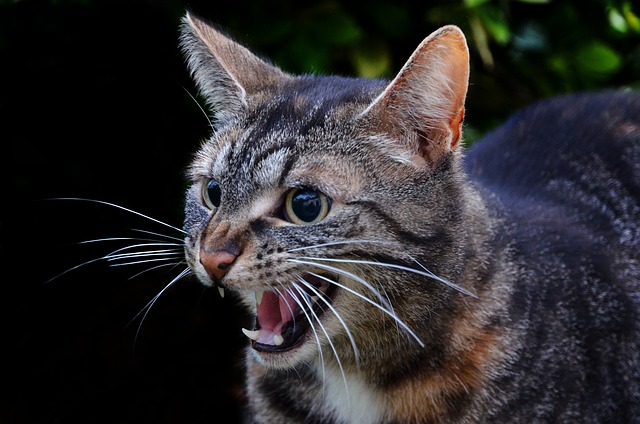
[Mean cat; source]

The CPS worker who takes him away from his familiar mouse hole is the one with the claws. She's the cat who hisses and growls when pushed. She's the one who chases the little boy verbally and corners him with her words. She's the one who snatches him with her claw-like nails from home and exposes him in his miserable nest to take him away. She snaps  him up, metaphorically, like a furry little snack. 

[The snake; source]

The little boy's foster dad is the snake, sly and cold and ready to swallow him whole and turn that little boy into part of himself. He knows just how to make eye contact with his acid-green eyes and freeze him in his tracks, so his prey can't even ponder escape. He uses manipulation instead of violence to reshape the little boy into her own image. 

[Teddy bears; source]

Meanwhile, the boy's allies, whose symbolism has yet to be determined, will be something warm, fuzzy, and comforting. There will be hope, and it will be built through the language and metaphors of the text. They could be the warmer side of dog or puppy, a teddy bear, a kitten, a hamster, or anything else that gives the friends appropriate meaning on every level. 

[Animal Farm and symbolism; source]

 For a reversal of this pattern, you could read Orwell's Animal Farm, which uses animals to symbolize types of humans. There is a wealth of information out there on the characters and what they mean. Now, ponder your characters. Would it be helpful to do an exercise like this, where you use overall symbolism to shape the characters into something greater than the individual parts? 


Monday, March 8, 2021

Animals in Writing

[animals in lit-source]

Introduction: 

 I've been blogging about how to write in a literary fashion.  Someone asked me recently what that even means.  It just means writing with greater than surface meaning.  A lot of literature throughout history has employed animals in their writing.  Animals can be employed to show deeper meaning in a story or poetry. 

[Eden's Snake-source]

Animals-as-animals

Frequently in literature, animals play their conventional role in the lives of human characters.  Dogs, cats, horses, and so on show up in the Bible, in Shakespeare, and in so many other places as an animal, often simply a tool or companion for humans.  Eden is full of animals that later appear on the ark or that fill a lord's menagerie, a farmer's pens, or a child's backyard. In many places, they're just part of the setting, the source of the sounds of mooing, the smells that fill the nose, or the meal on the table. They can give your fictional world its flavor, sometimes literally.  They can also be called on for all the standard symbolism, snakes as sinister, dogs as embodiments of loyalty, foxes as sly creatures, etc. It's a little harder to recreate the symbolism into something less conventional, but many have achieved it.  

[horses-source]

However, their literary capacity comes alive when the writer transforms them into part of the meaning of the book. An animal can be employed to reflect and highlight some aspect of your main character.  In The Three Musketeers, one of the Musketeers shows his carelessness and deep character flaws by gambling away his and the protagonist's horses. Basically, horses mean mobility and power, both of which he loses.  Ivanhoe, meanwhile, is empowered and aided through the loan of a horse.  Likewise, riding a horse in Shakespeare often shows the power, grace, and might of kings and other important characters.  In each case, animals reflect some critical aspect of human characters, who play the primary role in a story.  

[The animal mask-source]

Animals-as-metaphoric-humans

In some works, animals play the part of animals-as-metaphoric-humans. Authors mask some aspect of the human condition or character in the guise of an animal. Stories like Aesop's Fables, Seuss's books, and fantasy novels, among others, feature animals as human-like characters. This kind of story has a long history.  In Aesop's Fables, animals act as human stand-ins.  We are to learn from their stories lessons we can apply in our lives, such as the tortoise who wins the race over a hare through steadiness or the ant whose practical preparation stands in stark contrast to the near-sightedness of the grasshopper.  The reader is meant to learn how to behave based on the animal's actions.

[Puss-source]

The personified animal continued to appear through oral and literary fairy tales, sometimes to show morals and sometimes for other reasons. Puss from "Puss in Boots," for instance, is the main actor, who outsmarts the enemy in order to bring the human character his happily ever after.  The cat, then, would be a stand-in for a clever human. Because of the fictional cover, he does things humans can't or won't do, such as eating the enemy transformed into a mouse, but he shows the reader they can solve problems. It's a melding of fantasy and triumph of the human(ish) spirit. 

[children's books-source]

Animals continue to stand in for the reader into the modern literary era, especially in children's books.  The characters in Green Eggs and Ham, for instance, are clearly meant to seem like an adult and a child having a conversation, though they are both clearly furry and animalistic. Through their whimsical dialogue, the reader learns to have an open mind. Animals-as-humans can teach the reader lessons. The lessons aren't so moralistic in more modern tales, but they're still there.  

[spider-source]

Today

In recent years, editors have taken to discouraging the use of talking animals, but yet, they continue to be available to writers as a literary trope.  In Harry Potter, the spiders act as speaking characters, but they are clearly meant to be alien and other, the dangerous and predatory side of human nature.  Their characterization also complicates the idea of a simple moral.  They are neither clearly good nor truly bad, neither clearly ally nor unequivocally enemy.  Aliens, half-humans, and others that are not human may appear in the same way, as something that is other and yet reflective of some aspect of human nature.  

How do animals appear in your writing, if they do at all?  How can you bring added meaning into your story by employing either animals-as-animals or animals-as-humans-in-disguise?