Sunday, July 1, 2018
The Importance of Reading
It's been said many times, but I'll say it again: read what you want to write. If you want to write like Jane Austen, Charlotte Bronte, J.K.Rowling, or anyone else, read. You can read as many blogs, as many how-to books, as many guides as you want, but the best way to really get to know your genre is to read it. If you're a poet, immerse yourself in poetry. If you want to be a poet, but you're reading historical romance, the wrong voice is likely to rub off on your writing.
I find my voice best when I'm reading books that have the voice I want to emulate. If I'm writing a romance, my work is at its best when I have recently read a string of romances along the lines of what I want to write. If I want to write profound literary fiction, I should sink deeply into the world of literary fiction to get a sense of how they do it. If I want to write light and humorous fiction, that's exactly what I should read. My young adult fiction is at its best when I've just read Rick Riordan, Harry Potter, and others that have a unique style. No matter what genre I wish to write in, it's always best when I read books like those I want to write. What are you writing? Go find something like it, o you have a sense of how to do it. Then, you'll know comparable pieces when it's time to publish.
Sunday, June 17, 2018
Beware of Hopping Heads
I've been blogging about how to write more literarily. This one is actually how to write more like modern literature rather than traditional literature, with a focus on modern YA literature. There was a time that the distant, omniscient narrator was the way of all writing. A writer could tell you what was happening in John's head one paragraph, Sylvia's the next, and their garbage man a third. The writer could play a wild game of checkers, with pieces in their command moving however they wanted.
Now, readers, as a rule, prefer the intensity of learning the interior world of one, two, or a select few characters. They like first-person or third-person limited. Readers, especially young readers, like a book like Rick Riordan's Percy Jackson series in which we follow the ins and outs of one character in first-person. They also like Riordan's Heroes of Olympus series, wherein there are multiple perspectival characters, but we follow in third-person one character for a chapter or a few chapters then switch to another for more chapters. Or, they like J.K. Rowling's Harry Potter series in which we never leave Harry's head. He may observe Voldemort through his dreams, but we're still firmly in Harry's mind.
Older literature, even children's literature, hops heads all the time, without chapter changes or even section changes. If you pick up books like Tamora Pierce's Lioness Rampant series or even Roald Dahl's Matilda, among several others, a narrator can hop heads two, three, four or more times a chapter. At the time, this was the norm, just how they did it. Now, a writer is advised to avoid such random head-hopping.
If you want to hop heads, it's a rule of thumb to make at least chapter or section divisions. If I want to appeal to a modern reader and editor, I'll no longer write, "John looked at Sylvia and marveled at her beauty. She looked back at John and wondered when he would take a shower." Instead, I'll write, "John's longing eyes turned toward Sylvia's lovely face only to catch her nose wrinkle and eye roll as she leaned away from him." I see her response to the world through her body language but firmly remain in his head, at least this chapter. Next chapter, I can hang out in her head a while. Or I can just stick with John the whole book, reading the world through his eyes.
Go through something you've written recently. Is there any section in which you're intentionally or unintentionally jumping from head to head like on the 90's series "Quantum Leap," without changing sections or chapters? Is there a time in the middle of one section where your character, mind-reader like, magically knows what someone else is thinking or what actually motivates another WITHOUT having telepathy? If so, it's time to tweak your writing to avoid head-hopping. Your reader will thank you for it.
Sunday, June 3, 2018
Figuratively Speaking
I've been writing about how to make any kind of writing more literary. My student posed a question I'd never heard before, one which seemed like it could lead to some interesting discoveries for writers. He pondered the comparison and contrast between the similar concepts of simile, metaphor, hypocatastasis, pataphor, anthropomorphizing, and ideasthesia. I figured these terms wouldn't be hard to differentiate, but it turns out there's a reason people struggle with these terms. They're not your garden-variety kinds of words.
Some of these terms are commonly understood. Most people know a simile is the comparison of one thing to another, pointing to a resemblance between two things. "That guy's like a baby, the way he uses his hands to eat and throws a temper tantrum every five minutes." Most students who have spent some time in an English class can tell you a metaphor ties image with thing closer together, representing one thing by another, basically like a simile without the word "like." "That guy's such a baby." I had to do research for the third one, hypocatastasis. I didn't even know there WAS a third level to this. Apparently, it's not even in some copies of the Oxford English Dictionary. Hypocatastasis, as it turns out, ties these things even CLOSER together by simply implying one with the other. "Baby!" (Spoken to the guy.) I can imagine using all of these techniques in writing.
Pataphor, meanwhile, is a metaphor that is fairly all-encompassing. It is two steps removed from non-metaphoric language. Here is an example given on pataphor.com:
| Non-figurative -Tom and Alice stood side by side in the lunch line. |
| Metaphor -Tom and Alice stood side by side in the lunch line, two pieces on a chessboard. |
| Pataphor -Tom took a step closer to Alice and made a date for Friday night, checkmating. Rudy was furious at losing to Margaret so easily and dumped the board on the rose-colored quilt, stomping downstairs. |
(The pataphor has created a world where the chessboard exists, including the characters who live in that world, entirely abandoning the original context.)
Pataphor is described as "an extended metaphor...which occurs when a lizard's tail grows so long it breaks off and grows a new lizard." Basically, it's a comparison that creates a new world wherein the metaphor becomes almost a new reality.
Anthropomorphism/personification is simply a kind of metaphor in which an object or animal is ascribed human-like traits as in "her painting spoke to my heart." Obviously, a painting doesn't literally speak, and hearts don't have ears. However, such a personification may make the painting seem more powerful.
These concepts were easy compared to the next one. I had to research multiple sources to even comprehend the definition. Ideasthesia is not necessarily a method of creating imagery but the philosophical concept that experiences evoke visceral responses in the human mind. Red evokes anger and passion. Blue evokes emotional or physical coldness. It's more a response to a stimulus than a way of writing. This is more like metaphor or simile in action. If you understand how this works, how the human mind processes a stimulus, you may be able to create a more effective and unique metaphor, one that evokes the same response the actual thing does.
Figurative language can make a piece more powerful. It's one thing to say that something happened. It's yet another to turn a simple event into a visceral and emotionally-charged moment through language. Find a straight-forward piece of writing or simply WRITE a scene in which someone makes a sandwich or plays volleyball. Now, try to include each kind of figurative language in turn. Advanced challenge: try employing all of these forms of figurative language in one paragraph. Now, use these in your writing to make them more meaningful and literary.
Sunday, May 20, 2018
Writer's Net
One time, I had my writer's net open as I stood at a bus stop. Three people in a row stopped by and either talked to me or gave me something like an extra bus token. That led to another story idea. A writer's net is a state of mind. If you're mentally searching for a unique thought process, explanation, or history behind something you see in your world, you'll find an idea.
You can also flip to a random page and find a line. Use some piece of that or an idea there as a jumping off point for a story. Say you find, "The lions were watching." Write a story about omniscient lions overseeing a world or anthropomorphic lions on a world of anthropomorphic animals or something like that. Ask yourself the question, "Why are the lions watching? What are they watching?" If you're using a literary piece, you can allude to it in your story.
Search your world for story ideas, for something strange or interesting going on around you. Then start asking yourself what could really be happening in another world and why. Live life like a writer, and you'll find an endless supply of subjects on which to write.
Sunday, May 6, 2018
Heart Drafting
I've been writing about how to make one's writing more literary. One of the best pieces of advice I've ever heard on how to write came from the movie "Finding Forrester," a movie about and for writers. “You write your first draft with your heart, and you rewrite with your head.” This isn't specifically about writing in a literary fashion but can be used by any writer. When I started college, every paragraph was hard-fought because I did my research as I went along. If I wanted a quotation, I'd look it up.
If I want the writing to flow, I should just let it flow. I need to send my internal editor outside. I should NOT do spell check as I go along. If I have delays or distractions, sure, I can reread what I've most recently written to get back into the flow. But otherwise, I need to let it flow. Write that first draft with my heart. Then and only then can I let Mr. Internal editor, my notes, my research, my spell checker, my grammarian, etc. back in the room. Writing like this is fun and joyful. I highly recommend you try it, even if it's just in a free write. If you want to write, just write.
Sunday, April 22, 2018
What's Driving Your Narrative Bus?
I'm still talking about how to make your piece more literary. Think through what drives the literary novels you've read. I mentioned this a couple of years ago, but it is such an important topic that it ought to be revisited. A good novel is driven by something, or it just meanders and can fall apart. According to Orson Scott Card, the most common narratives are driven by character, plot, question, or milieu. The writer must continue that drive until the end of the story and satisfy reader expectation with that story, or it is incomplete. A reader will not be satisfied. Your story bus is stalled and stuck in the mud.
When a writer begins a story, he/she makes a contract with the reader. If the reader starts a Sherlock Holmes book or other mystery narrative, the reader knows to expect a question-driven plot wherein a story is not finished until the primary question is answered: who done it? If this question is not answered, the story is incomplete. If Sherlock lives happily ever after with a newly-found significant other but never finds the murderer, the reader will feel gypped. When a reader sits down to read a Jane Austen book, the reader expects a character-driven story. If Lizzy solves a mystery, thereby answering a question, but never solves her dissatisfaction inside through marrying Darcy, the reader will feel unfulfilled. When a reader sits down to a Alexandre Dumas adventure story, the darkness in the world around the character must be taken care of, or d'Artagnan or Edmond Dantes is not done with his story. This kind of story is plot-driven. When a reader sits down to a milieu-driven story, such as Gulliver's Travels, the reader is merely along for the ride, excited to learn everything there is to know about that world. The characters are tour guides to such a universe. The reader subconsciously expects the question, the issue with the character, the problem with the world, or full disclosure about the rules and features of this particular world when they sit down to read, or the story will feel incomplete.
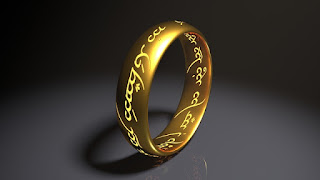
Know your story and genre. What kind of story are you telling? Genres are automatically associated with one of these drives. Mysteries, are by nature, question-driven, though other stories can be as well. You can tell a historical or fantasy mystery story in which a dragon and a prince set out to solve a mystery, but just know some readers will find that unnerving or strange. If you are telling a fantasy, science fiction, or adventure story, most often, you will need to introduce something wrong with the world, a darkness that has crept in and needs to be fought off, a false king that has been taken over, a curse on the characters, etc. You can also tell a fantasy story that is character-driven. This happens frequently. Fantasy can also be milieu. Lord of the Rings makes the land of Middle Earth the main character, while the characters are just types. However, milieu is the most difficult to pull off as the lone driver. Unless your land is particularly exciting, a tour-guide story line is likely to grow thin fast.
The Harry Potter series is one that manages to juggle all of these drives. The reader no sooner gets an answer to a question or mystery than Rowling presents another. Harry starts out lonely and looking for family, dissatisfied in his own skin, and ends up finding a place to belong and making his own family. There's also a darkness in the world that must be resolved before his story is complete. And readers are endlessly fascinated by the Wizarding world.
It may be an interesting challenge to employ all the drives. But if you have at least one that is done well, your reader will be content. What drives your story? Do you complete your contract?
Sunday, April 8, 2018
Feeling the Rain
I have been talking about writing in a more literary fashion. I talked a few weeks ago about when to use imagery and how to use color, but there is more to imagery than this. One of the most important aspects of writing is helping the reader feel. If you can get your reader to smile, to cry, to respond in a visceral and powerful way, they will likely come back for more. One potent way to do this is through the senses.
One of the first things you'll often notice about powerful and literary pieces is that they connect with the reader in a powerful way. Otherwise, people don't keep reading them over the years. If you've ever read The Great Gatsby, you'll remember that billboard of the glasses with eyes staring into the characters' corrupt souls. When thinking of Jane Eyre, many readers will automatically bring to mind the raging fire on the bed and feel that moment. Moby Dick brings us into the sensory imagery of the ocean, taste, smell, touch, etc. The dust of the dust bowl invades noses and mouths as we contemplate Grapes of Wrath. Its very title invades our senses as well.
You, too, can capture this kind of power. Go outside right now, at least after you finish this blog. You can go to the woods, to the woods, to your front lawn, anywhere. Look around. What do you see? Write it in as much detail as you can. Now, close your eyes and listen to everything for a full minute or two. Write what you heard, everything from the wind to the sound of voices, to the sounds of nature, birds or whatever there might be. Do the same with smell. Close your eyes to block out the most powerful image most of us experiences. What do you smell? Go to another area if you can. Are there different smells? Open your mouth. What does the air taste like? Touch things around you, air or the wall, or whatever. What does it feel like? Write it all down.
Now, add that kind of detail to the important moments in your story. Do a five senses check. Count to five senses every time something important happens. Do you have a moment of smell? Taste? Sight? Touch? Hearing? It's better still if you can instill meaning with each image. A red shirt can be just a red shirt. But a red shirt can also amplify the image of the angry man shouting at his neighbor. The image of that red shirt amplifies that anger since red is the color of passion. Does he smell like whiskey? That tells us what he's been doing and part of what's fueling his anger. It may also associate something else going on in your story. If your main character grew up getting beaten by his drunken father, that whiskey-laden man with a red shirt suddenly becomes, symbolically, his father. If that whiskey odor is so strong, he can taste it, this moment becomes more intense. Say the shouting man's voice sounds just like his dead, drunken father's. Now, we're getting not just descriptive but emotionally visceral as well. The senses tie to the meaning and emotion of the story and its protagonist.
Now go and describe the five senses outside. If you can take a laptop outside, figure out how to add those sensory moments into a story you've already written. Otherwise, find key moments to do a five senses check. Good luck.
Subscribe to:
Posts (Atom)


